

Works · 2015–2016
Rooftop Urban Farm
- Status
- 2015–2016
- Jonathan's role
- Core design team; head of the WOHA gardening club (Straits Times, 2017)
- Place
- Singapore

The project
On the roof of our shophouse office in Singapore, nearly 200 square metres of beds, vines, fish ponds and compost bins grow more than 100 kinds of edible plants. Here is how the farm works, and what a city roof can and cannot feed.
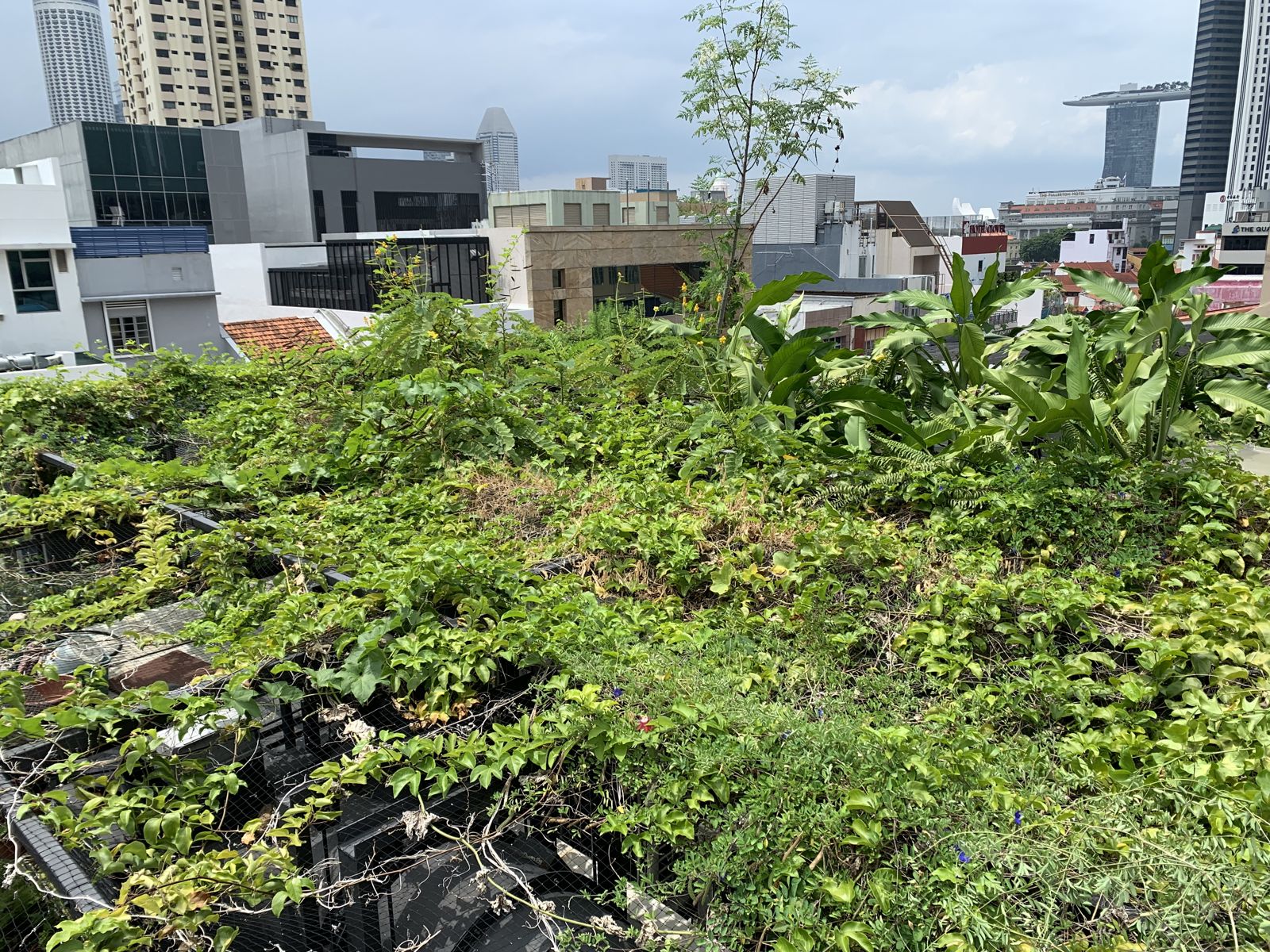
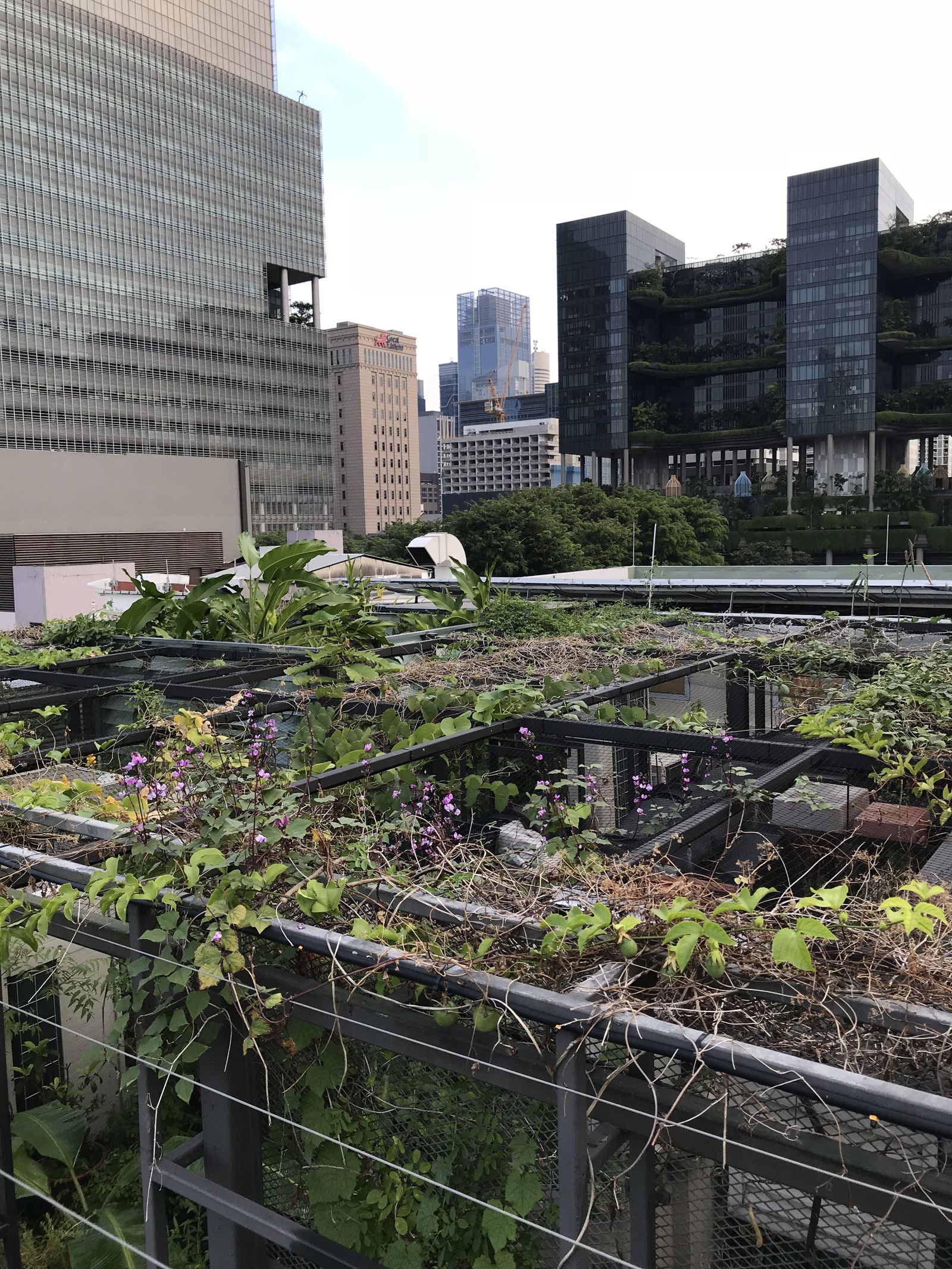
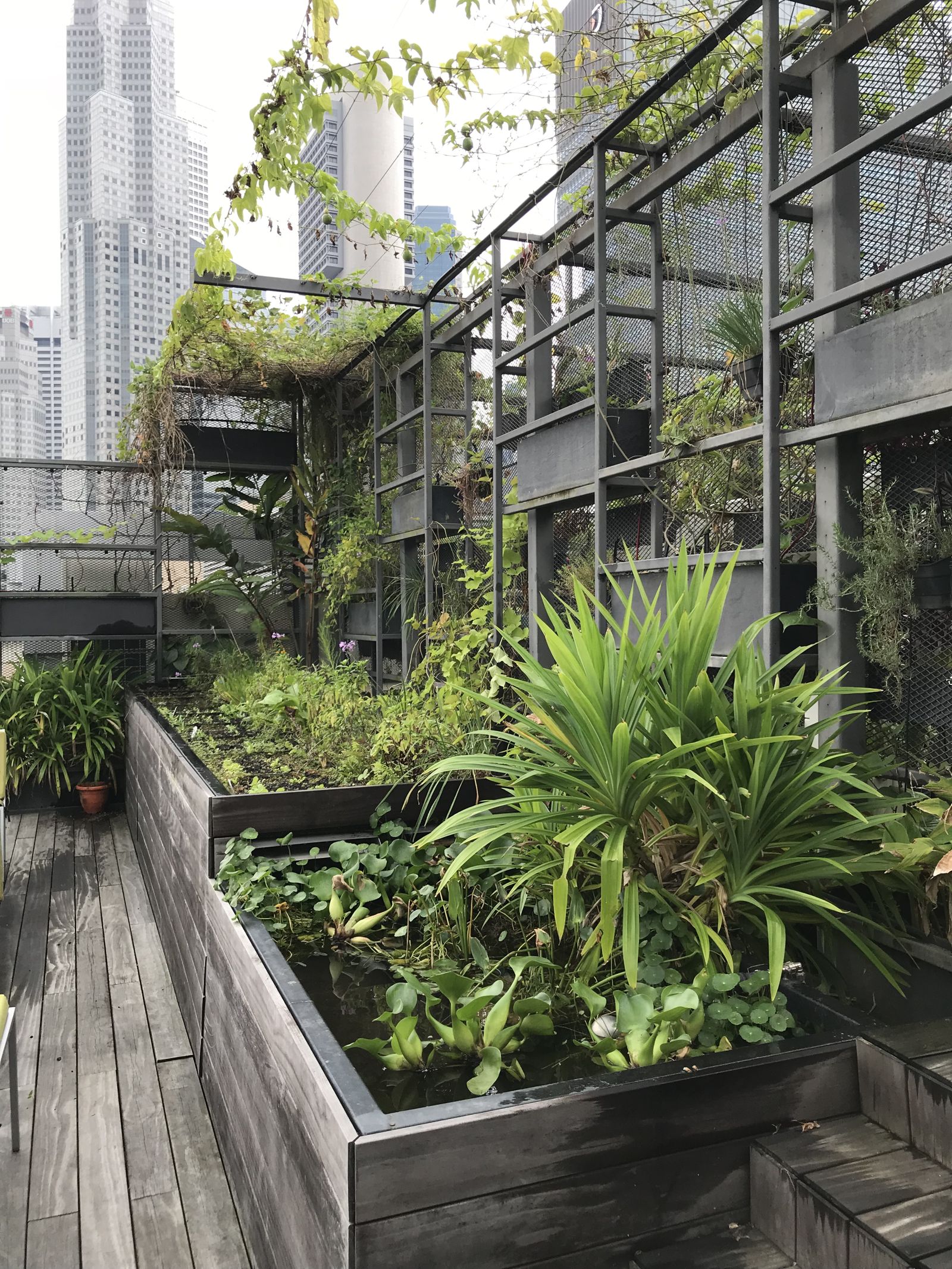
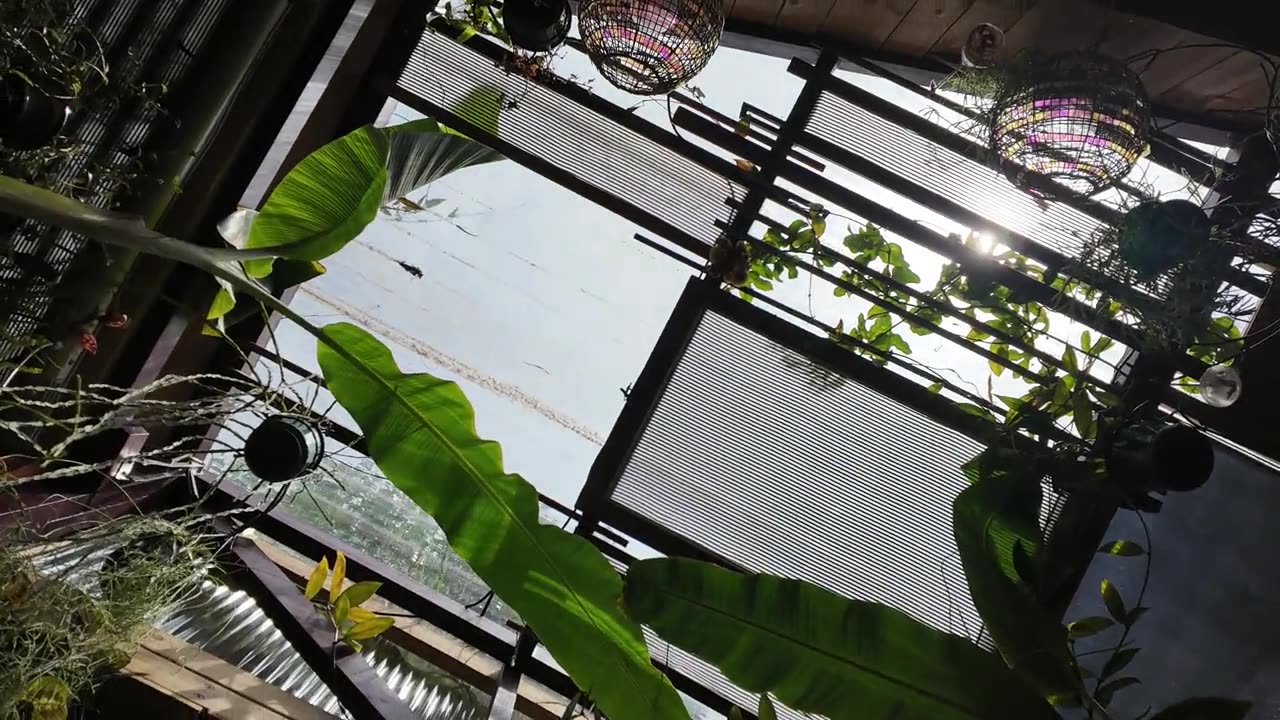
Above our shophouse office on Hongkong Street, a farm grows in the shadow of Singapore's financial district. Gourds and beans hang from steel trellises, leafy greens fill raised timber beds, and tilapia swim in a pond beside the seats. This is the rooftop farm at WOHA: nearly 200 square metres with more than 100 species of edible plants, watered by rain and fed by fish and compost.
The roof used to belong to air-conditioning compressors. When the office changed to a newer, more efficient air-conditioning system, much of that space was freed up, and we put it to work.
Our first experiments, in 2015, were small: a few planters, one crop at a time. They taught us a lot. On hot days the air up there was dry and the plants wilted, and pests quickly ate their way through a single crop. So we redesigned the whole roof as a small ecosystem instead of a row of pots. A core team designed and built it, including WOHA's founders Wong Mun Summ and Richard Hassell, and me, as head of the office gardening club. The farm in its present form was finished in 2017, for about S$50,000.
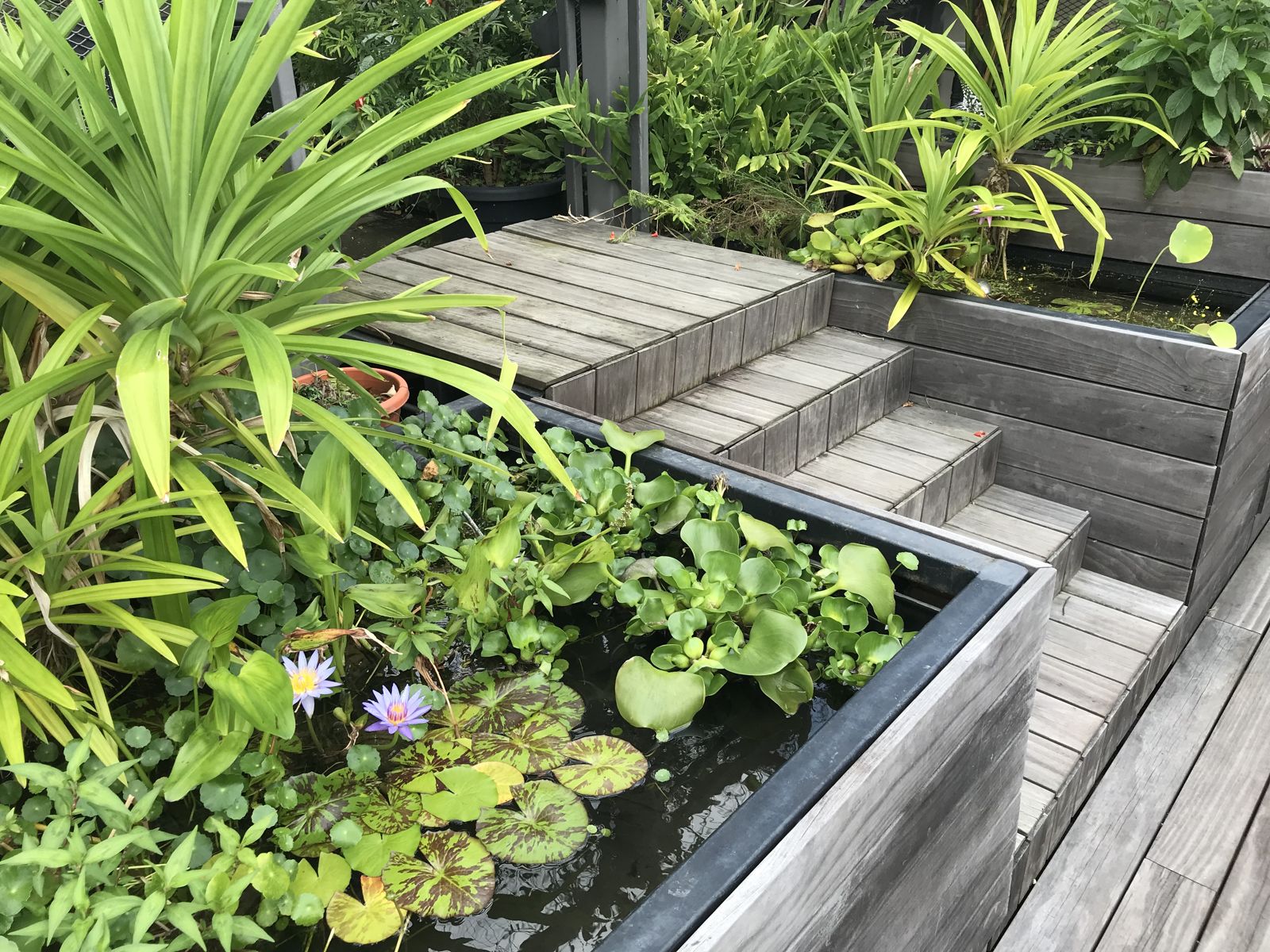
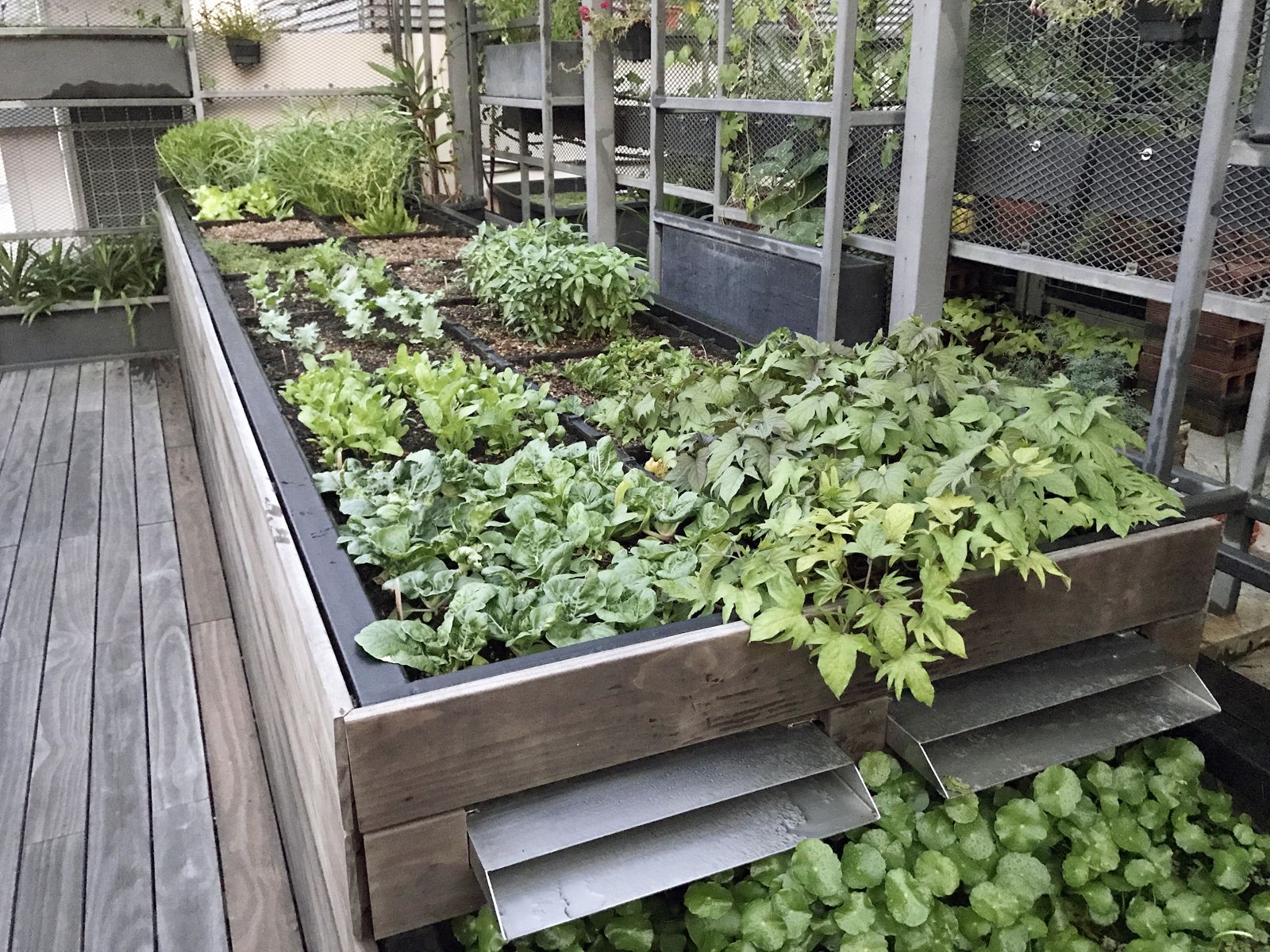
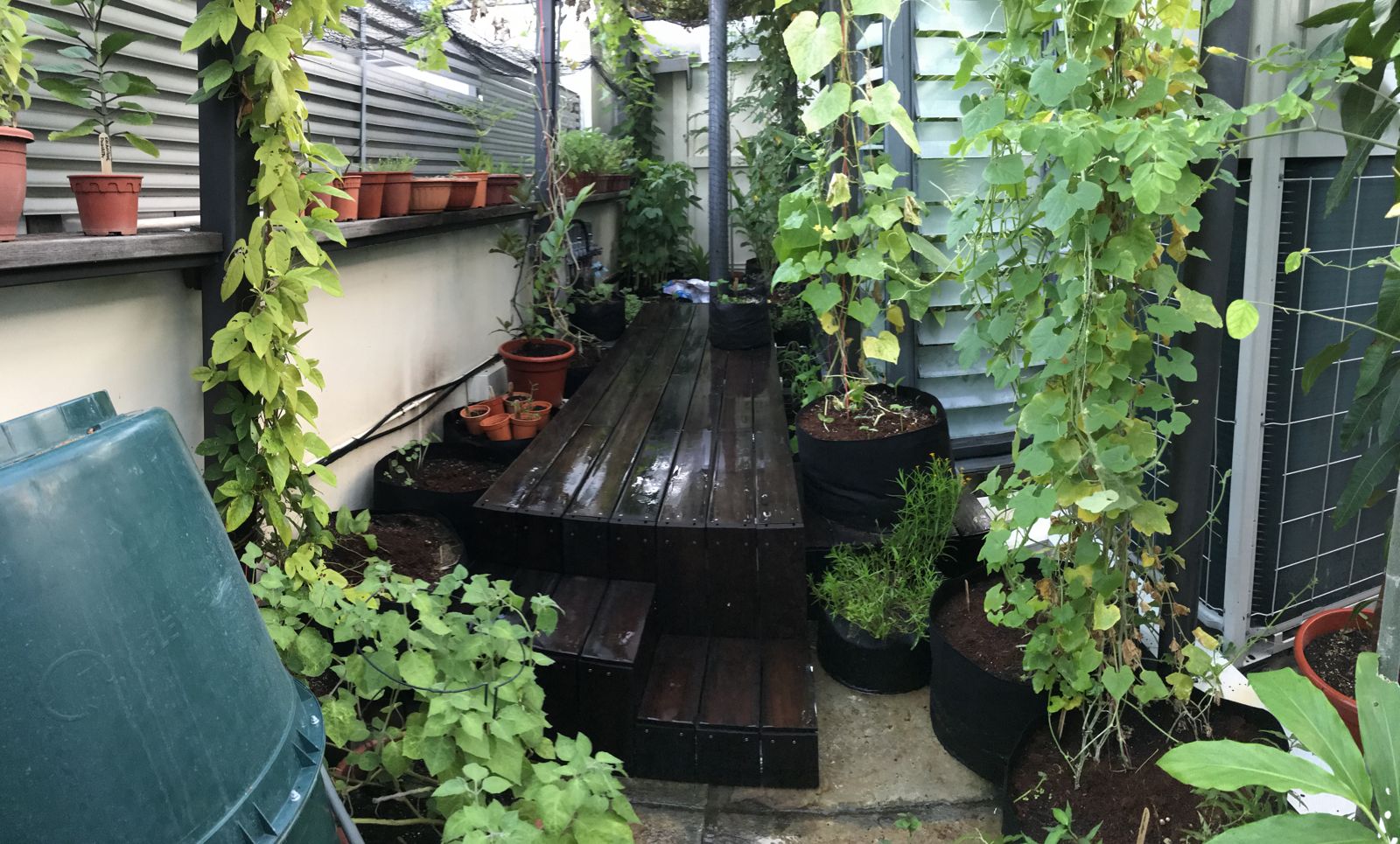
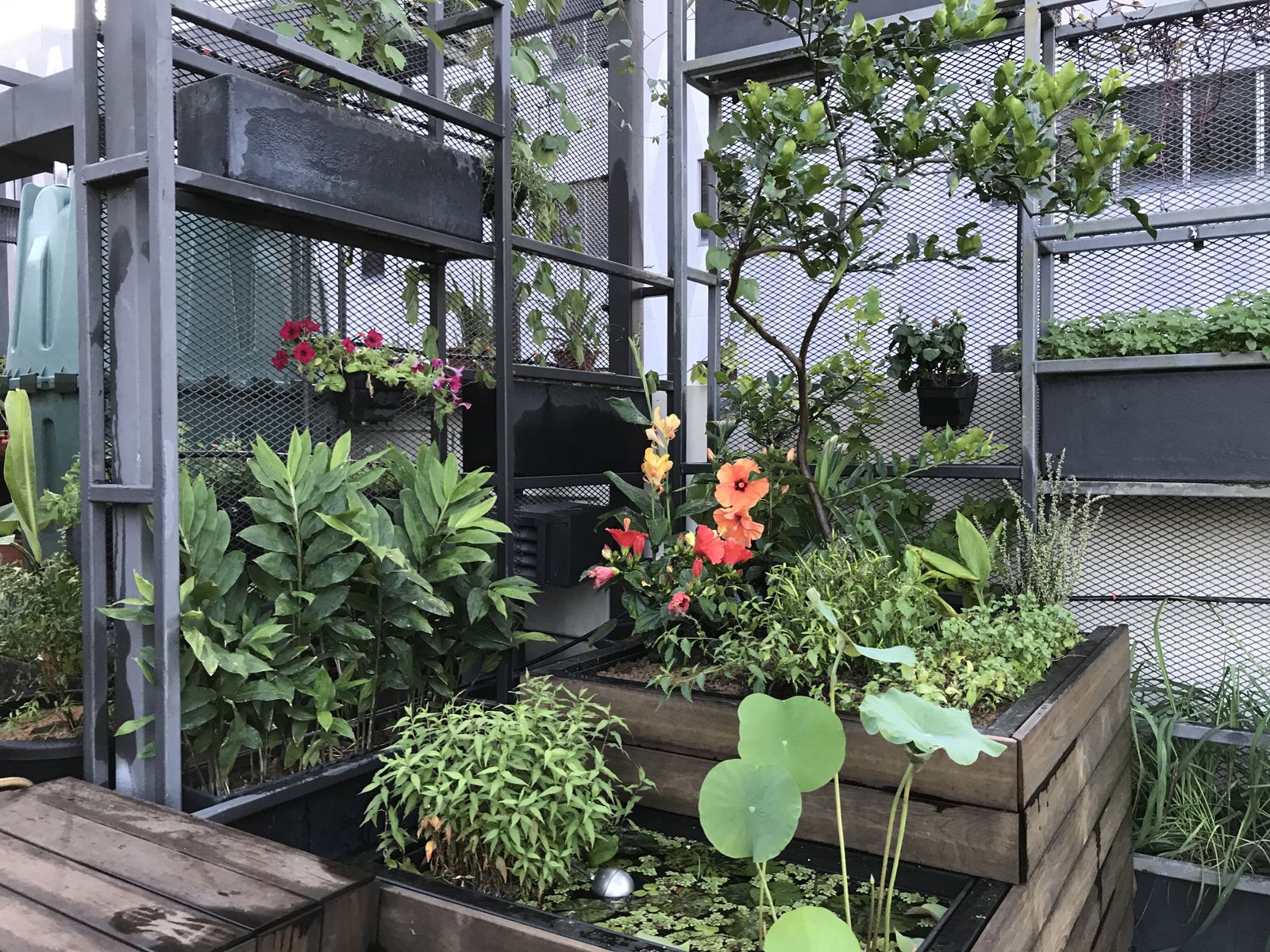
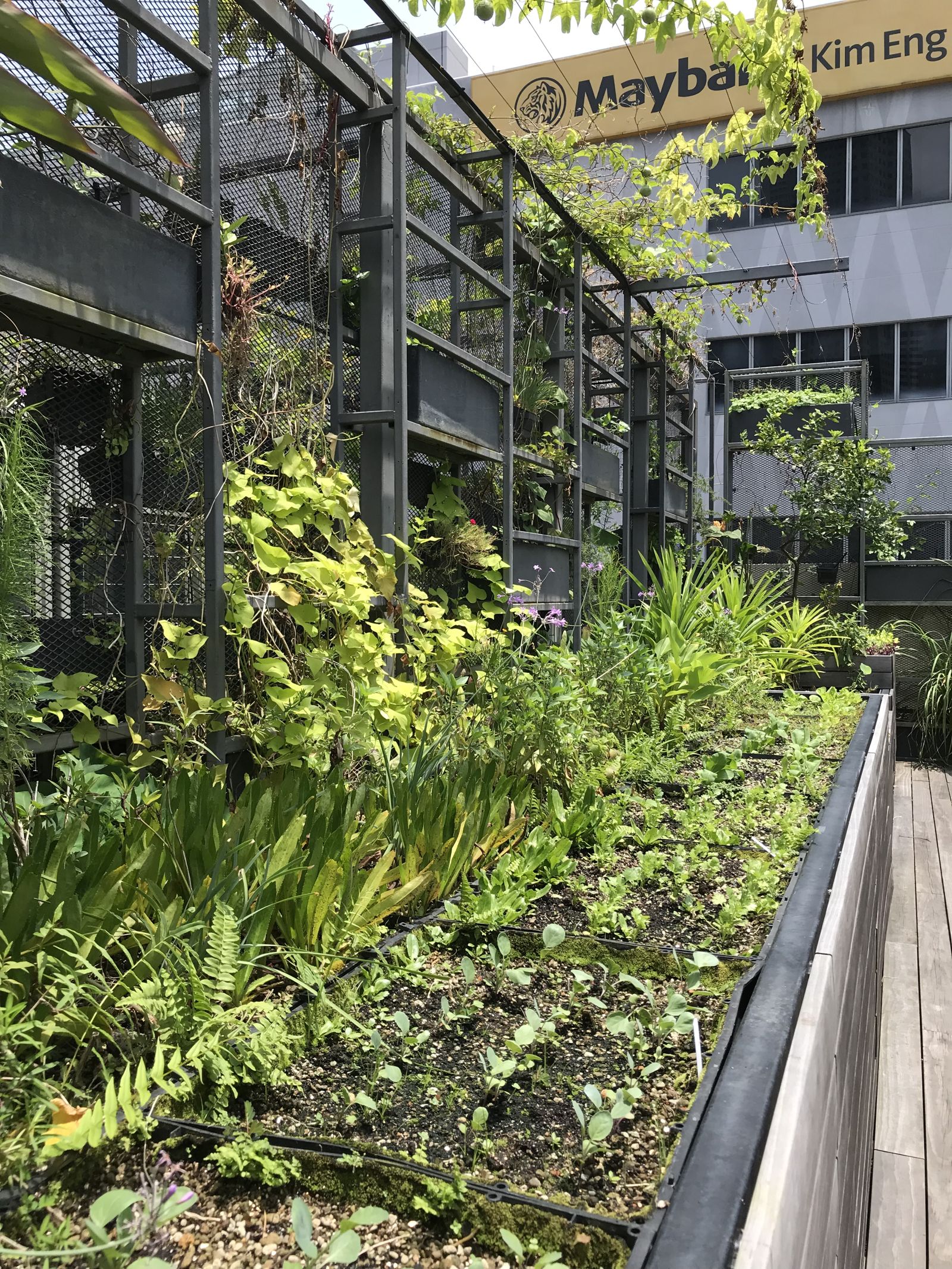
The front of the roof is a showcase garden, with seats among the edible plants, vines for shade, and ponds with fish and water plants that you can eat. A kaffir lime tree stands in the middle of one pond. The raised beds are boxes of treated pine, built high enough that you can tend them without bending or squatting. At the back there is room to test other ways of farming, and a bench for potting, propagating and sprouting seeds.
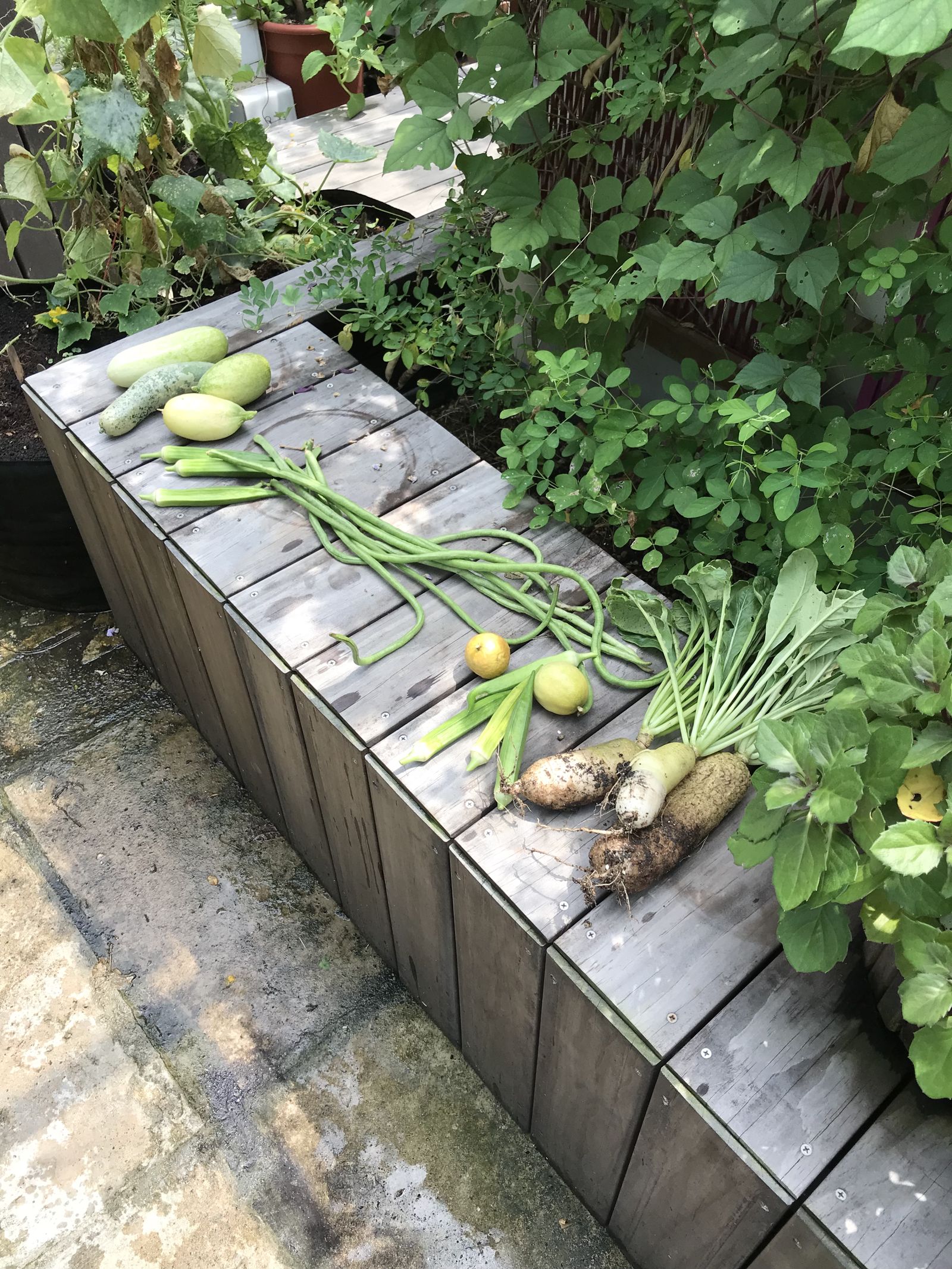
Singapore has no real seasons. It is hot and humid all year, with heavy downpours, and a roof adds strong sun and wind. Some temperate crops struggle, but the list of what thrives is long: kangkong, basil, pandan, dill and lemongrass; bok choy and white radish; okra, long beans, cucumbers and bitter gourd; ginger, guava and bananas.
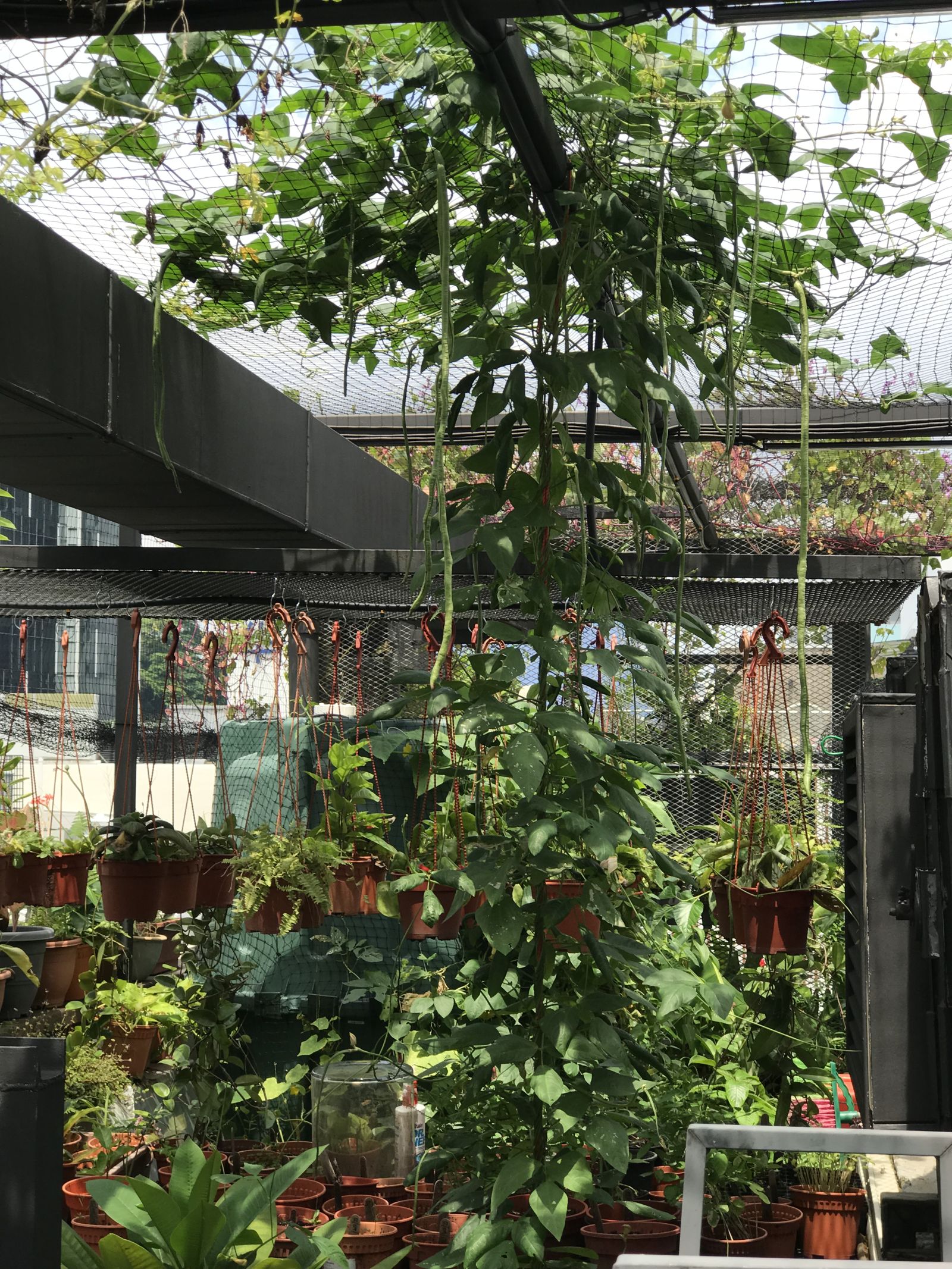
The trick is to plant in layers, like a rainforest. Climbers such as gourds, loofah, long beans and butterfly pea cover the trellises and make a canopy. Below them, small fruit trees give more shade. In their shelter, herbs and leafy greens do well on a roof that would otherwise scorch them.
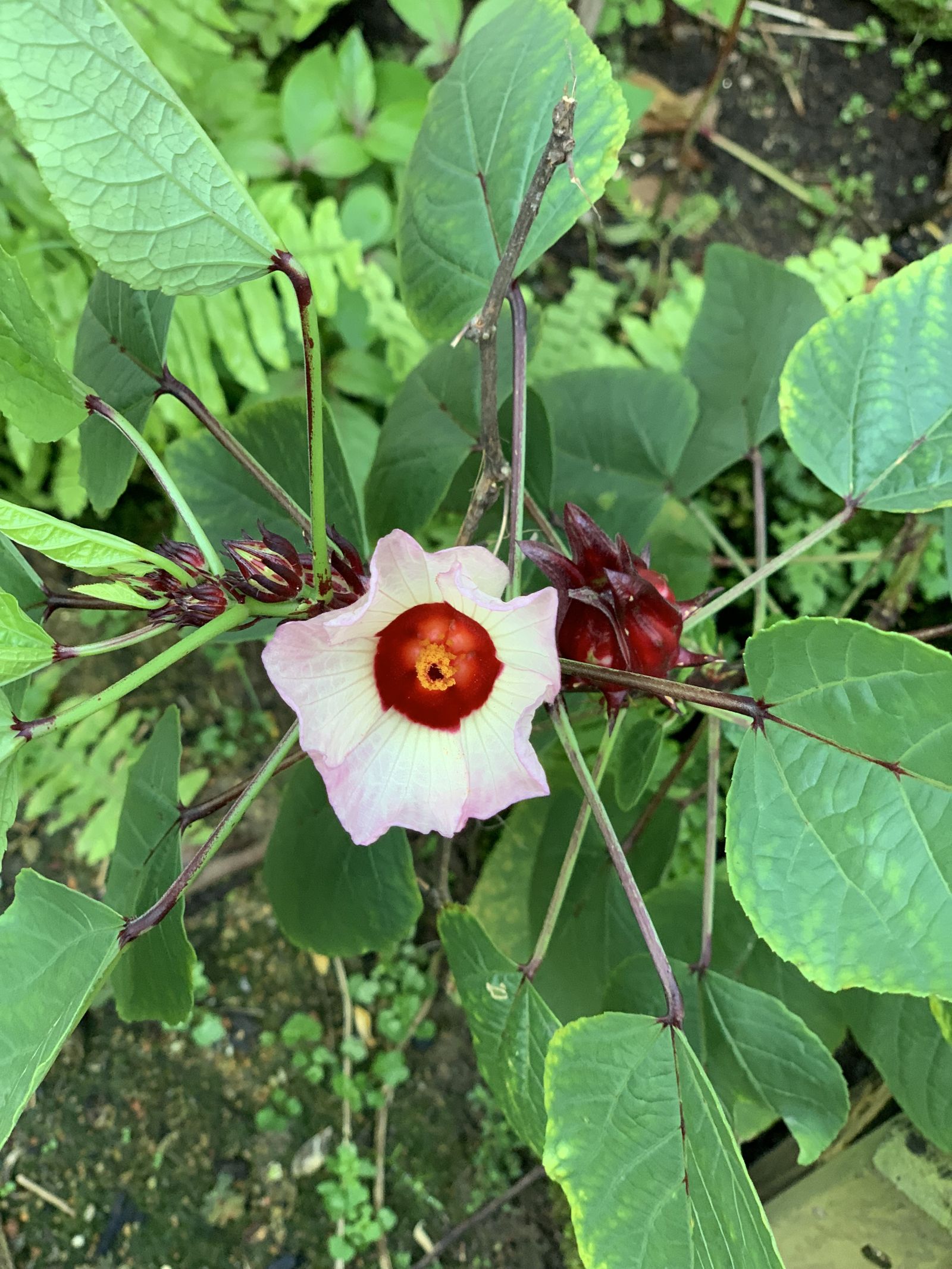
The harvest is shared among the staff. People pick kangkong and lemongrass for their salads, or cook them for office parties. Some crops are less obvious. Roselle gives red calyces for a sour, ruby-coloured drink, butterfly pea flowers turn rice and drinks blue, and a loofah left to dry on the vine becomes a bath sponge.
The heart of the farm is an aquaponics system. A pump lifts water from a tilapia pond into a sloped planter bed. As the water seeps through gravel and roots, the plants take up the nutrients in the fish waste and clean the water. It then flows back into the pond by gravity, through stainless steel spouts made for the job. The fish feed the plants, and the plants clean the water for the fish.
The soil is fed in a similar way. Food scraps from the office go into compost tumblers and a worm farm, and the compost and worm castings go back into the beds. We use no pesticides.
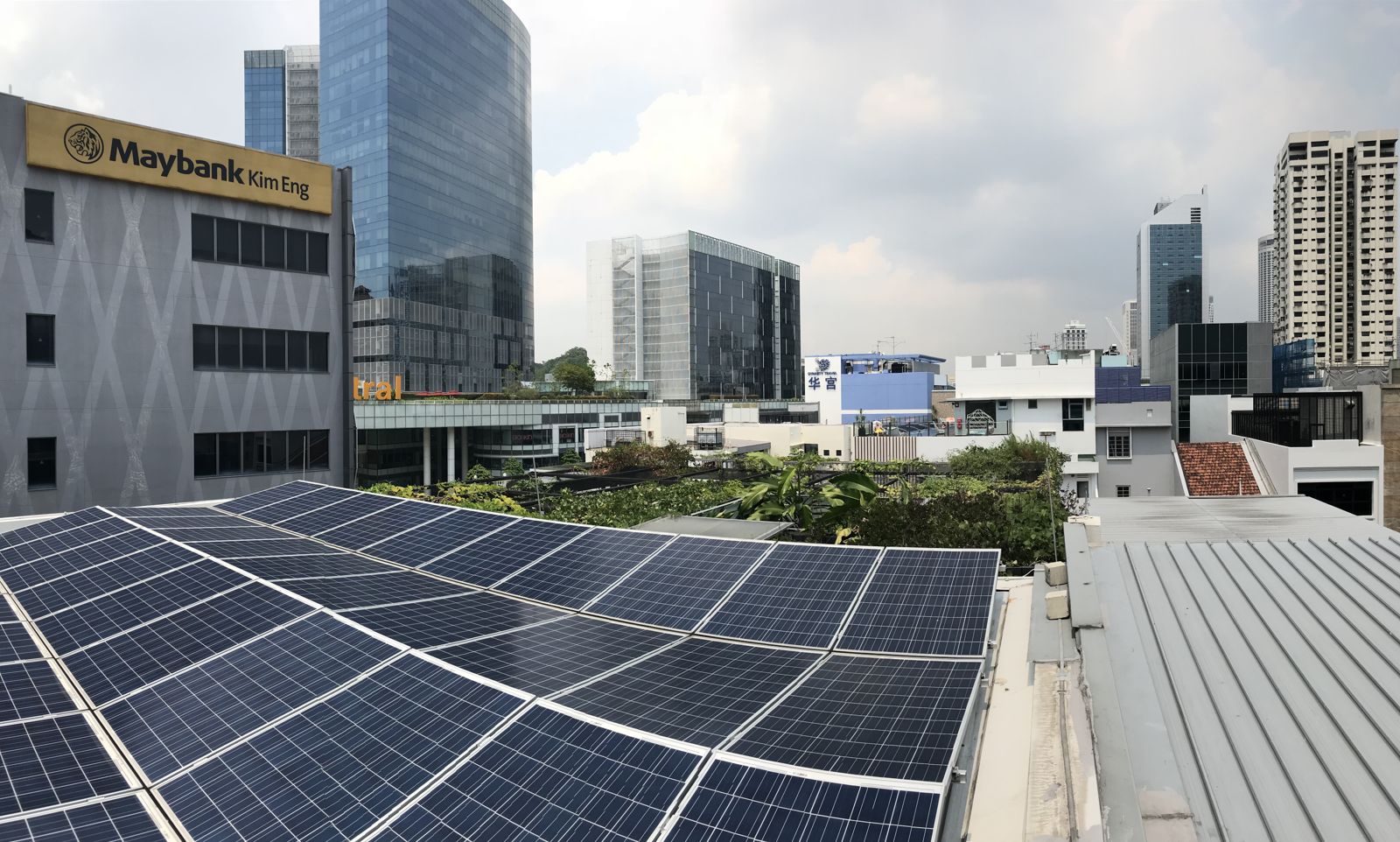
Water comes from the sky. Tropical downpours fill tanks on the roof, and an automatic drip system feeds the beds from them. The tanks hold enough to water the whole farm through up to two weeks without rain. On a higher part of the roof that nobody walks on, about 120 square metres of solar panels supply around 7 per cent of the office's electricity.
The ponds do more than hold fish. As the water evaporates, it cools the air and keeps it humid, which the plants love, and it gives birds and insects somewhere to drink. Once the roof reached a critical mass of plants, our pest problems faded: with so many species, there were enough birds and helpful insects to keep the pests down. Then plants we had never sown began to come up. Birds had brought the seeds from nearby parks and from the hanging gardens of Parkroyal on Pickering, just down the road.
A farm like this does not run itself. Members of the gardening club meet every Friday for about an hour to sow, prune, harvest and top up the compost, and a small core team looks after it day to day. The bench at the back is where new seedlings start.
We never meant it to be a commercial farm. It is just as much a sky garden for everyone in the office to enjoy. As Wong Mun Summ says, it does not feed the whole office, but it shows that it can be done.


Singapore imports more than 90 per cent of its food. In 2019 the government set a goal to produce 30 per cent of the country's nutritional needs locally by 2030, on an island with very little farmland. Roofs are among the few spaces left. Singapore's urban farmers have been testing new ways to grow food for years. Last year the first commercial farm opened on the roof of a multi-storey car park, and the rebuilt Funan mall has a public urban farm on its roof. Planning rules now let some developers count a rooftop farm towards the greenery they must replace.
Our own roof will never feed the office. What it taught me is that a farm works best as part of the building, not an extra on top: its water, cooling and energy should work with the building's own systems. In the master plan for Punggol Digital District, which I worked on at WOHA, the rooftops are set aside for large-scale urban farming and solar panels. At Kampung Admiralty, a community farm already grows on the roof of a building with homes for older residents.
A roof will not replace farmland. But it can grow herbs, greens and fruit a few floors above the people who eat them, keep the rooms below cooler, catch the rain and give birds a stepping stone across the city. Multiply that over thousands of roofs, and a city starts to carry a little more of its own weight, and to need a little less from the land beyond it.
Update, November 2026: WOHA is now my former employer. Since this post, I have written about what the farm taught me about rooftop ecosystems in When Buildings Come Alive!, and our Car-free Permaculture Forest City concept in Costa Rica includes a permaculture farm. Singapore has also replaced its 30 by 30 goal: by 2035, local farms are to supply 20 per cent of the fibre and 30 per cent of the protein eaten in the country.
Photos by Jonathan Choe.
Have a project in mind?
Book a Design Consultation, or tell us about your project.